

The rushing Yellow River, after writing a big "few" word on the land of China, flows all the way east to the sea. On the northern edge of the Ordos Plateau on the south bank of the "Few Character Bends", there is the Kubuqi Desert, the seventh largest desert in China, known as the "Sea of Death".
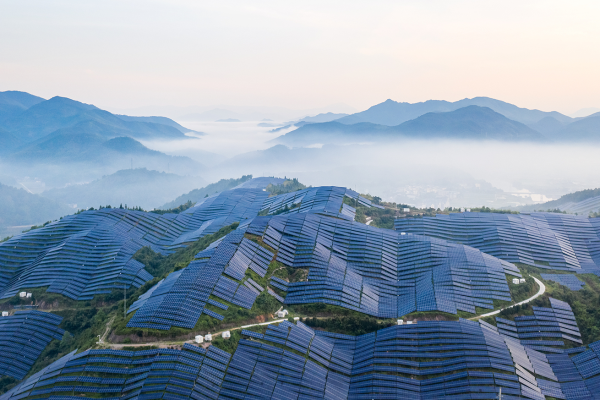
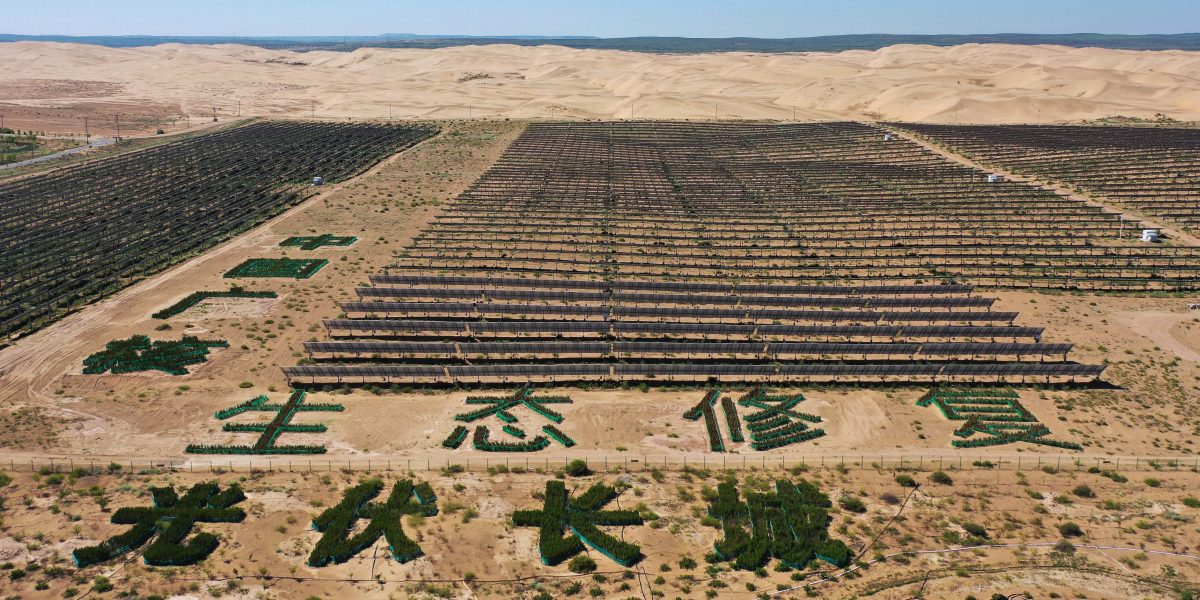
In the sand sea of "yellow sand covers the sky and the sun, birds have no trees", bright blue photovoltaic panels are connected together, and an endless "Great Wall of Photovoltaics" is being built on the northern edge of the desert, becoming a solid barrier for local ecological governance and economic development.
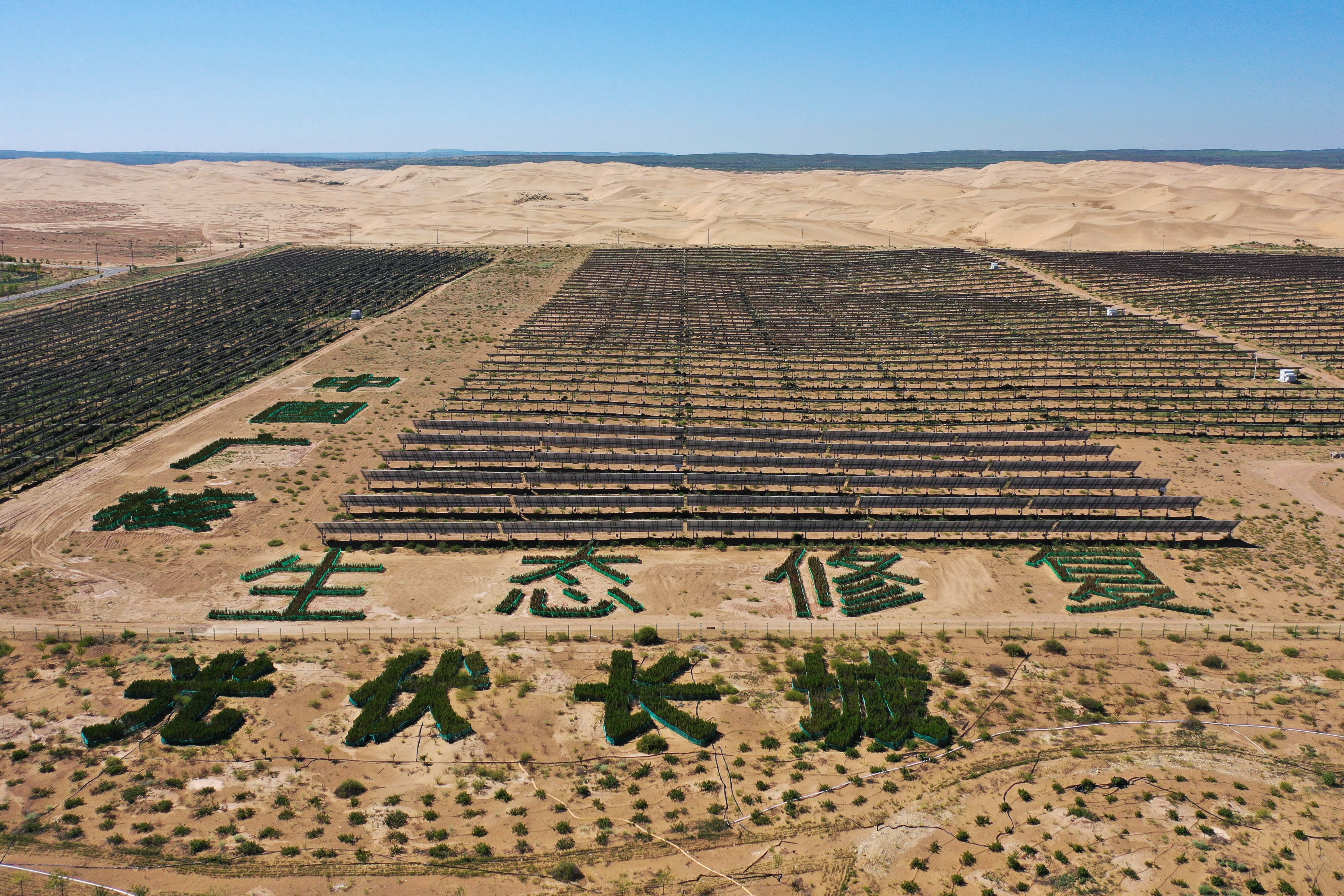
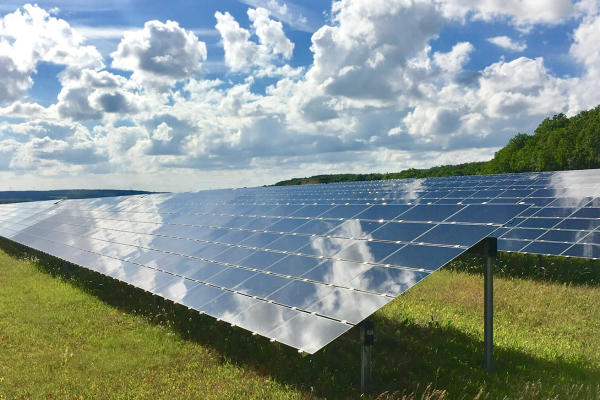
The overall project started construction in December 2022, and has completed the first and second phases of the grid-connected power generation pilot project of 1 million kilowatts each, and 63,000 acres of desert are dressed in photovoltaic blue. Na Guiting, vice chairman of Inner Mongolia Three Gorges Mengneng Energy Co., Ltd., who is responsible for the implementation of the project, said that the construction of photovoltaic projects requires the erection of a large number of photovoltaic panels, and the 2 million kilowatt photovoltaic project alone has erected 3.87 million photovoltaic panels.
"The construction model of 'photovoltaic ecological governance' realizes power generation on the board, and takes into account the characteristic ecological restoration, cash crops, afforestation and greening and technological innovation between the boards and under the board to create a three-dimensional ecological restoration model." Hong Guangyu, a researcher at the Institute of Forest Ecology of the Academy of Forestry of the Inner Mongolia Autonomous Region, said that photovoltaic panels block direct sunlight, reduce surface water evaporation, effectively reduce wind speed, improve the living environment of plants under the board, and reduce the rise of sand and dust, which is beneficial to solar power generation.
Under the photovoltaic panels, slender drip irrigation pipes water the plants regularly. "Ordos is rich in coal, and there are many large coal mines around the Kubuqi Desert, and the local drained water in the coal mines is introduced into the photovoltaic base for photovoltaic panel washing and plant drip irrigation." Hong Guangyu said that the combination of solar pumps and fine drip irrigation and other technologies has effectively solved the problem of plant irrigation in desertified areas.